
KB: Resolve License Renewal Failed and License Usage Issues in Altium Designer
 Altium Designer
Solution Details
Identify Common License Failure Symptoms
Users may encounter one or more of the following issues in Altium Designer:
- Warning: “License Renewal Failed. The License Manager was not able to renew your license.”
- Warning: “License has expired. Please contact your Administrator for license renewal.”
- A license cannot be released or continues to appear In Use after release.
- The Use button is grayed out.
- A renewal failure occurs after license group membership or allocation settings are changed while On-Demand license seats are already in use.
- Company Dashboard » Reports » Real Time Usage shows a seat that is still being used after a group or allocation change.
Understand the Different Licensing Failure Causes
These issues can be caused by one or more of the following conditions:
- Corrupted or outdated local license cache stored in
C:\ProgramData\Altium\*_Security. - Stale authentication or user session data.
- Automatic Leasing enabled on expired or unused licenses, leading to allocation conflicts.
- An On-Demand license seat remaining in use after license group membership or allocation settings have changed. Changing the allocation does not necessarily return a seat that is already being used to the available license pool. Existing usage can therefore temporarily continue until the seat is returned. Altium recommends making allocation changes when the applicable license seats are not in use.
- Firewall, VPN, or restricted network settings blocking access to licensing services.
- Antivirus or endpoint protection software blocking or quarantining required Altium files.
When a renewal failure starts immediately after a license group or allocation change, check current license usage before proceeding with local license-cache, network, or security troubleshooting. The Real Time Usage report shows On-Demand licenses currently considered in use and provides per-user usage information.
Select the Appropriate License Recovery Path
- General renewal failure: Sign out and back in, release active licenses, and clear the local license cache if required.
- Expired license warning: Check expired or unused licenses in the Company Dashboard and disable Automatic Leasing where applicable.
- Invalid client version or connectivity-related warning: Check antivirus or endpoint security software and verify network, VPN, firewall, port, and endpoint access.
- Failure after a group or allocation change: Check Company Dashboard » Reports » Real Time Usage for an active seat associated with the affected license. Where appropriate, release the seat before the affected user reacquires the license. A user can release a seat associated with their own account, while a Group Administrator can force-release another user's seat.
Apply the Appropriate Resolution Procedure
If Altium Designer displays a warning indicating license renewal failure.
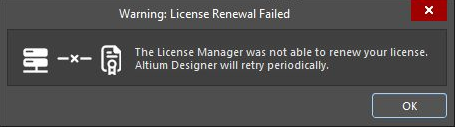
Try these steps:
- In Altium Designer, click your profile icon and select Sign Out.
- Sign back in using your Altium account credentials.
- If the issue persists, release any active licenses.
- Close Altium Designer completely.
- Navigate to
C:\ProgramData\Altium\(enable hidden files if needed).
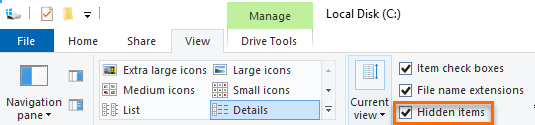
- Delete all folders matching
*_Security(one may exist per installed version).
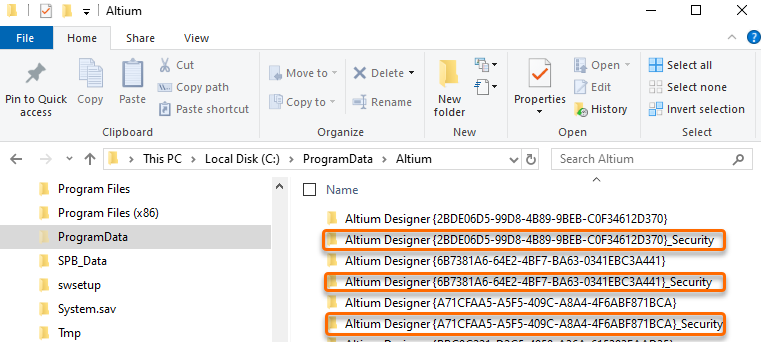
- Restart Altium Designer and sign in again.
Notes for clearing the local license cache:
- The
*_Securityfolder contains cached license and session data and is automatically re-created when Altium Designer starts. - Multiple installed versions of Altium Designer will each create their own security folder.
- This solution may also resolve the following issues:
- License cannot be released or continues to appear In Use by the same user after release
- Use option is grayed out
If the warning indicates that the license has expired.
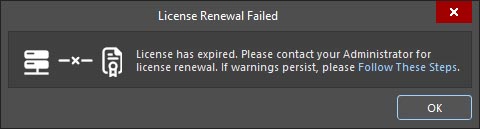
Automatic Leasing needs to be disabled on all old and unused licenses on the dashboard by following these steps:
- As group administrator for your organization go to Company Dashboard » Licenses.
- Select an expired or unused license.
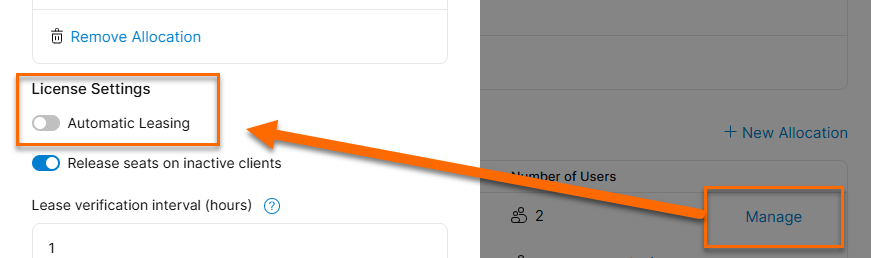
- Scroll to the License Allocation section and click Manage.
- Disable Automatic Leasing.
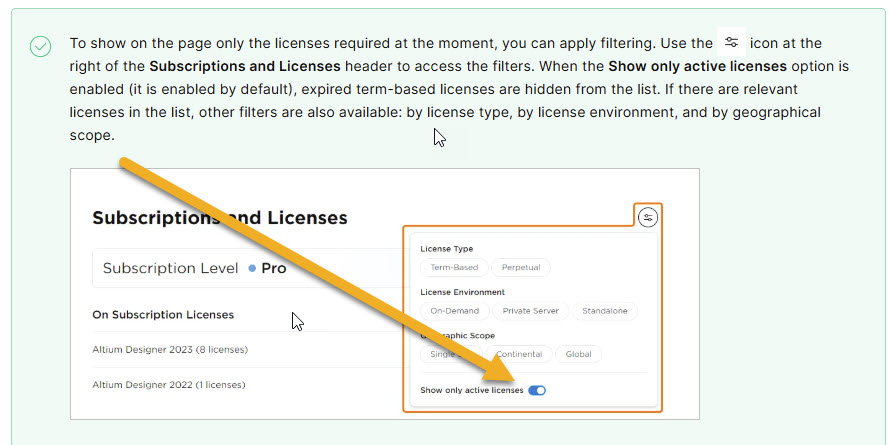
- If needed, disable Show only active licenses to view expired licenses.
Notes for Automatic Leasing:
- Automatic Leasing is disabled by default for new licenses but may remain enabled on older configurations.
- This documentation provides additional information on working with license allocations: Allocating Licenses
If the warning indicates an invalid client version.
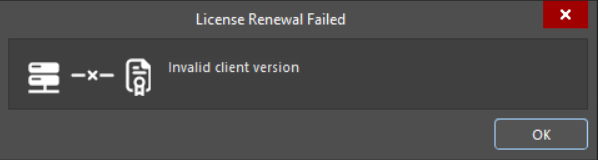
The issue may be caused by security software blocking required files or restricted network access.
Check for antivirus or security software interference:
- Check whether any Altium
.dllfiles have been quarantined and restore them. - Add exclusions for Altium installation and data directories.
Check for network or connectivity restrictions:
- Verify that required ports and endpoints for Altium services are accessible.
- Temporarily disconnect VPN to determine if it is causing the issue.
License Renewal Failure After Group or Allocation Changes
Use this procedure when a license renewal failure starts after license usage group membership or an allocation is changed while seats of the affected On-Demand license are already in use. An existing seat can remain in use after the allocation change rather than immediately returning to the available license pool. This can result in an affected seat continuing to appear in Company Dashboard » Reports » Real Time Usage and can interfere with another user's ability to acquire or renew the expected license.
Identify an active seat after allocation changes:
- The license renewal failure started after license group membership or allocation settings were changed.
- Altium Designer appears to show an available license or allocation, but the user cannot renew or acquire the expected license.
- Company Dashboard » Reports » Real Time Usage shows a seat still being used by a user affected by the allocation change. The report provides current On-Demand license usage and per-user usage information.
- License usage information indicates that a seat acquired under the previous allocation has not yet been returned.
Prevent renewal failures during allocation changes:
- Before changing license group membership or allocations, check Company Dashboard » Reports » Real Time Usage for applicable seats that are currently in use.
- Where practical, have affected users return their active seats before modifying the allocation. Altium recommends making allocation changes while the applicable seats are not in use.
- After completing the allocation change, have affected users reacquire the appropriate license under the new allocation.
Release an affected seat and reacquire the license:
- Open Company Dashboard » Reports » Real Time Usage and locate the affected On-Demand license.
- Expand the license usage information and identify the user and seat that are still reported as being in use.
- If the occupied seat belongs to the affected user, open License Management in Altium Designer, expand the Seats information for the license, select the applicable seat, and choose Release. A user can also remotely release a seat associated with their own account on another computer.
- If another user's seat must be released, confirm that the listed user is no longer actively using the license. A Group Administrator can then force-release the seat from Company Dashboard » Reports » Real Time Usage.
- After the seat has been released, have the affected user reacquire or renew the appropriate license.
Important: A Group Administrator can force-release a license seat used by another user. A non-administrator can release only seats associated with their own account. Force-releasing another user's active seat causes that user to lose the license, so verify that the license is no longer actively required before releasing the seat.
Additional Notes
- When a renewal failure starts immediately after a license group or allocation change, check Real Time Usage before clearing local cache data or investigating network connectivity.
- Changing license allocations while applicable On-Demand seats are not in use helps ensure that subsequent license acquisition reflects the new allocation.
- A Group Administrator can use Company Dashboard » Reports » Real Time Usage to review current On-Demand license consumption and force-release a currently used seat when necessary.
- Confirm that another user is no longer actively using a seat before force-releasing it.
References
- License Management in Altium Designer – Provides an overview of licensing models, usage, and behavior.
- KB: Cannot use an on-demand license renewed but showing outdated subscription date – Explains the role of
*_Securityfolders and why clearing cache resolves licensing inconsistencies. - KB: Allocate/assign license seats to users – Details how license allocation works and how administrators manage access.
- KB: Prevent multiple license seats being used on one installation instance – Describes how Automatic Leasing and allocations can cause licenses to appear in use.
- KB: Cannot install or use Altium possibly due to url and ports being blocked – Covers firewall, VPN, and network restrictions affecting licensing services.
- Generating Reports | Company Dashboard – Describes the Company Dashboard Real Time Usage report and Group Administrator force-release functionality.