
KB: Understanding and Troubleshooting Altium 365 Workspace Storage
 A365
Solution Details
Identify Sources of High Workspace Storage
An Altium 365 Workspace uses three main storage types: Git, Database Storage, and AmazonS3. When storage usage is unexpectedly high, identifying which type of data contributes to the usage helps determine what to investigate. Deleted items can also continue to consume Workspace storage while they remain in Trash.
Understand How Workspace Data Consumes Storage
Altium 365 uses Git as its Version Control System (VCS) for project data. Git storage applies only when the built-in VCS is used. Projects configured with No VCS or External VCS do not use Altium 365 Git storage. Git contains a project's work-in-progress data and version history. This includes files that appear in the Projects panel, files under version control that display the green VCS check, and files that were previously part of the project but have since been removed. Removed files can remain in Git history so that earlier project states can be restored. Project releases are not stored in Git. Released project data is stored as item revisions in Amazon S3 storage.
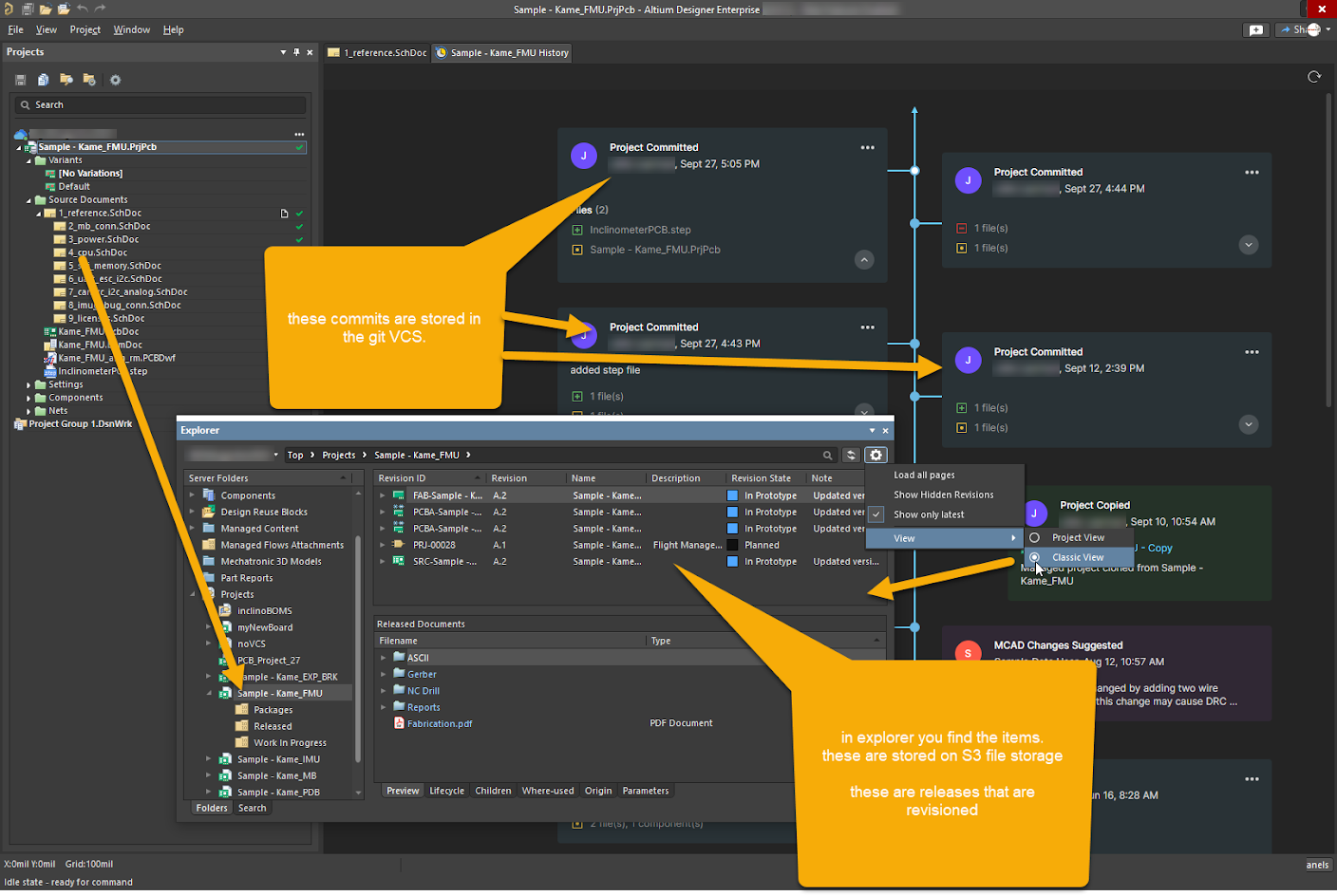
The Workspace Database links the different types of stored data together. It contains parametric information about components and projects, user information and access rights, parameters, comments and tasks, relationships between projects and Git repositories, links between components, models and datasheets, where-used information, and other relationships required by Workspace services.
Amazon S3 is used for Item Revision storage. A relatively small number of large item revisions may account for a significant portion of S3 storage. An item can have multiple revisions, with revision data associated with Workspace storage. Therefore, storage investigations should consider relevant revisions rather than assuming only the latest revision contributes to an item's storage consumption.
Examples of revisions represented in Explorer include:
-
- Symbols.
- Footprints.
- Simulation models.
- Datasheets.
- Component Templates.
- Project releases.
- 3D models used by MCAD CoDesigner.
- Other Workspace item revisions.
Some item revisions are directly visible to users. Others are system items used internally by the Workspace and do not normally require direct user interaction.
Common contributors to high S3 storage usage include Mechatronics 3D models uploaded for use with MCAD CoDesigner, files generated by project releases, 3D models embedded in footprint files, and large datasheets or multiple datasheet revisions.
Deleting an item and permanently deleting it are different operations. Deleted items are moved to Trash and can continue to consume Workspace storage. Permanently deleting applicable items from Trash is required to free the associated storage. Permanent deletion is irreversible through the normal Workspace Trash workflow.
Choose the Appropriate Storage Investigation Method
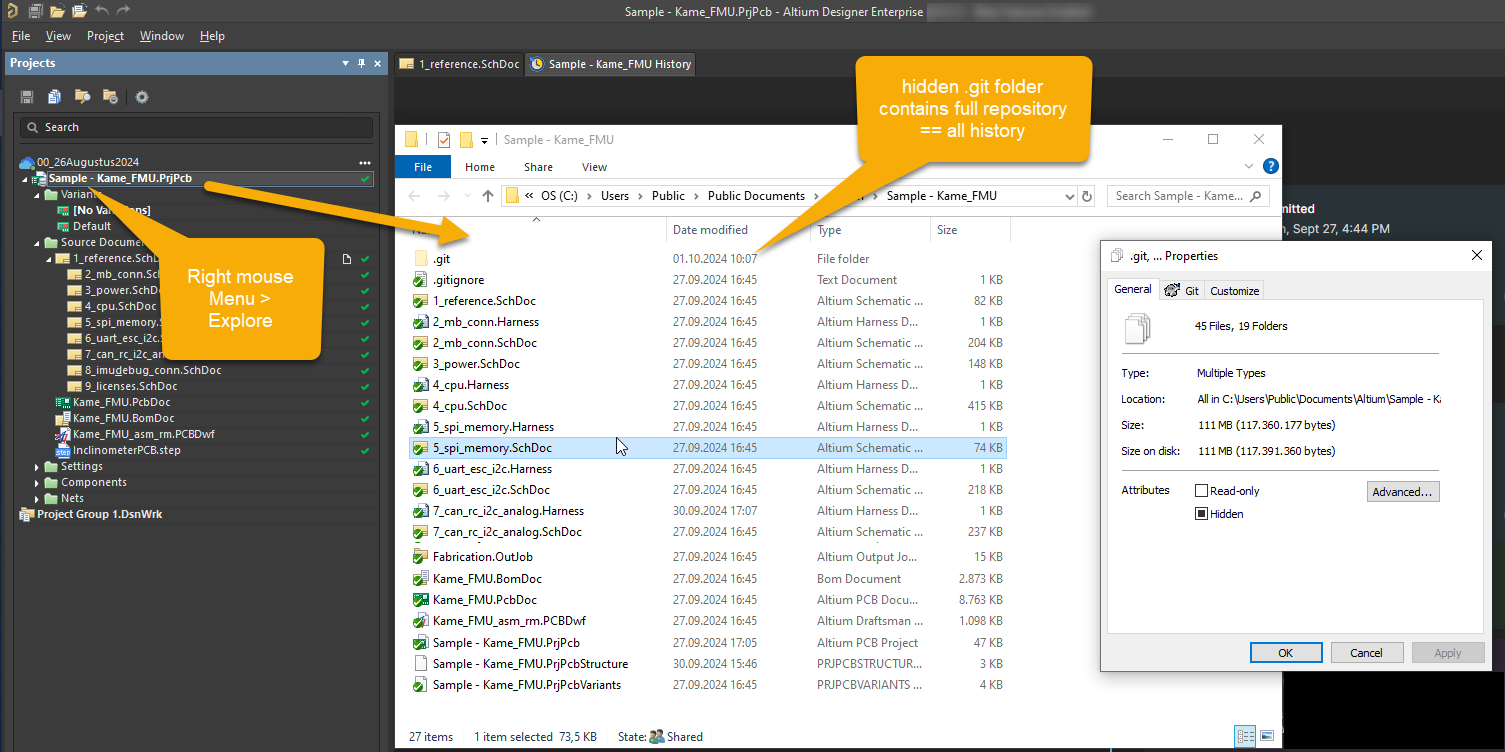
- Estimate Git project storage: Inspect the complete local project folder, including the hidden
.gitfolder. Repository history can account for a significant portion of the project's storage. - Estimate item revision size: Download an item revision from Explorer and inspect its downloaded size. Use this as a practical indication of revision content size rather than assuming it exactly equals the underlying S3 storage consumption.
- Inspect relevant revisions: When an item has multiple revisions, consider those revisions when investigating its storage usage.
- Inspect hidden system content: Enable system folders in Altium Designer when potentially large items are not visible in the normal Explorer view.
- Review common large content: Check 3D models, project releases, footprint-embedded 3D data, and datasheets.
- Review Trash: Permanently delete items that are no longer required when storage needs to be reclaimed. Verify the content before deletion because permanent deletion cannot be reversed through the normal Trash workflow.
- Consider batch cleanup: Use Altium 365 Data Cleanup when storage usage is associated with larger quantities or classes of obsolete server data rather than a single large item. Review the available cleanup categories and select only content that is no longer required.
Inspect and Reduce Workspace Storage Usage
Estimate Git project storage:
- Open the project in Altium Designer.
- Locate the project's local folder in Windows File Explorer.
- Check the size of the complete project folder, including the
.gitfolder.
The .git folder is hidden by default. It contains repository data and project history, so it can account for a significant portion of the project's total Git storage.
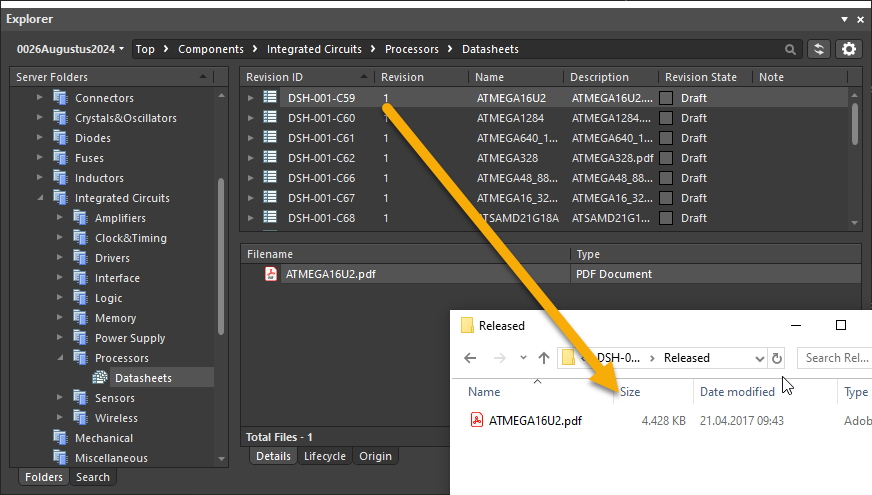
Estimate the size of an item revision:
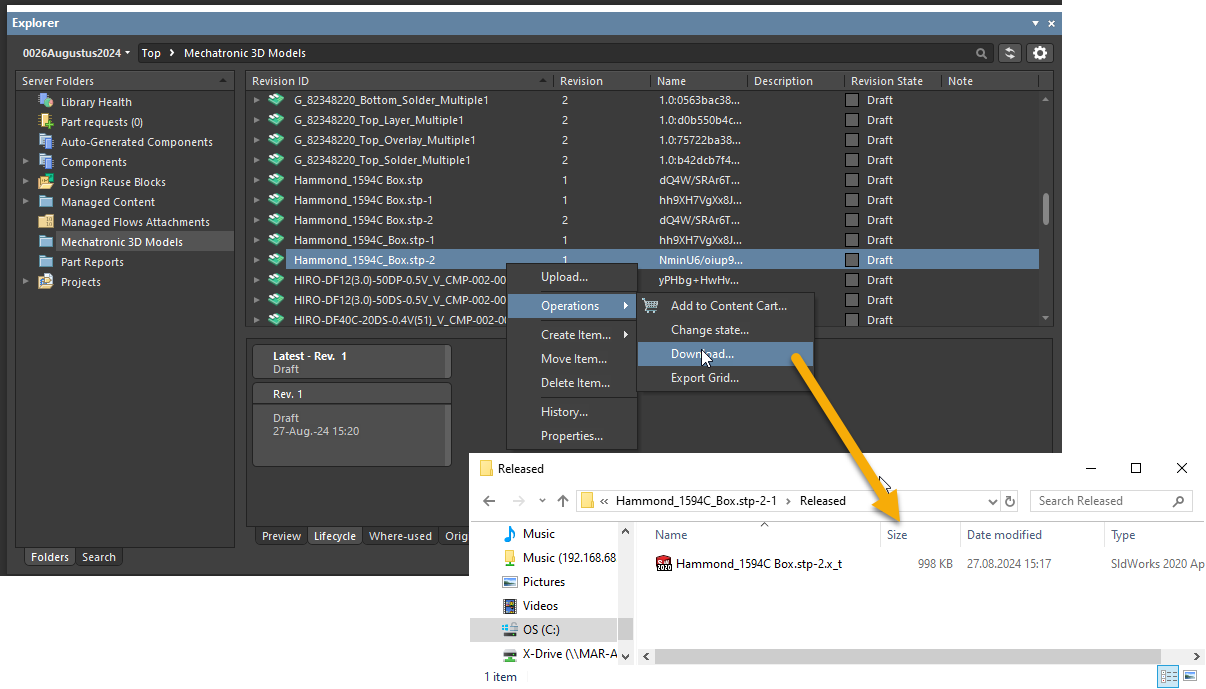
- Locate the item revision in Explorer.
- Download the item revision.
- Check the downloaded file size.
- If the item has multiple relevant revisions, review those revisions as part of the storage investigation.
- Use the downloaded size as an indication of revision content size rather than assuming it exactly represents the underlying S3 storage consumed by the revision.
Workspace content can also be reviewed from Altium 365 Workspace » Admin » Explorer.
Show system folders when investigating S3 usage:
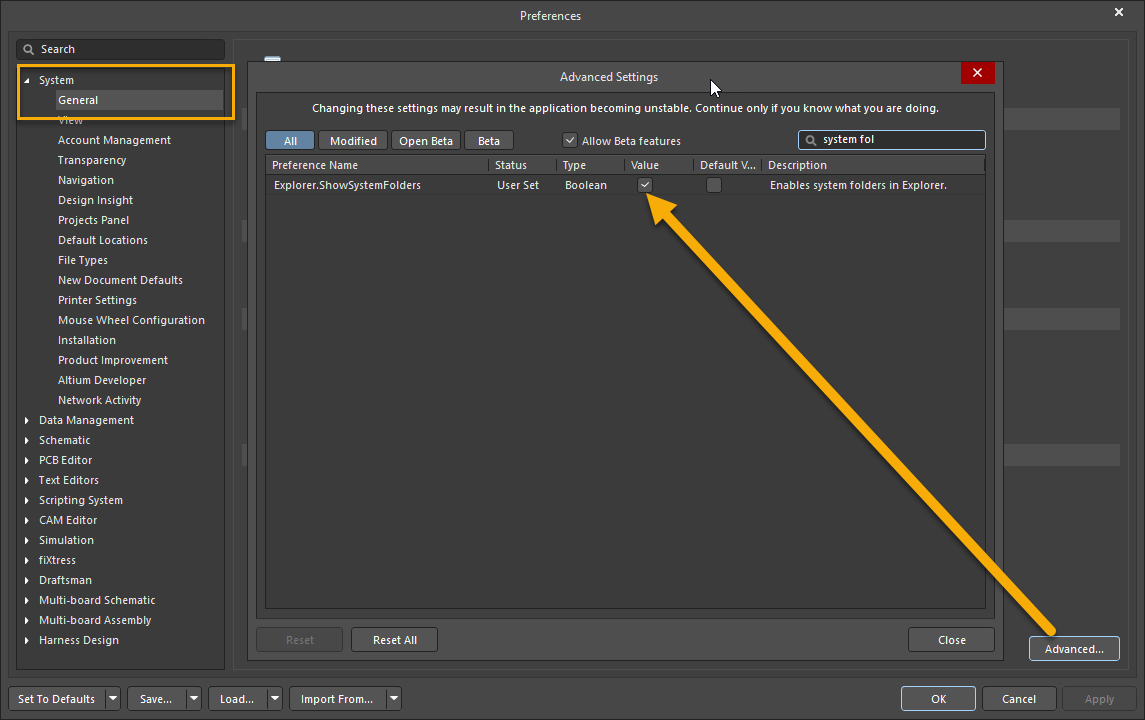
- In Altium Designer, go to Preferences » System » General.
- Click Advanced.
- Search for
Explorer.ShowSystemFolders. - Enable the Value checkbox.
- Use Explorer to inspect system folders and items that are normally hidden.
Review and permanently remove deleted content:
- Open Trash and identify deleted items that no longer need to be retained.
- Verify that the items and their associated data are no longer required.
- Permanently delete the applicable items from Trash to free their associated storage.
Use batch cleanup when appropriate:
- Determine whether storage usage is associated with larger quantities or classes of obsolete Workspace data rather than an individual large item.
- Review the data categories available through Altium 365 Data Cleanup.
- Select only data that is no longer required.
- Verify the affected content before proceeding with cleanup.
Additional Notes
- Altium 365 storage is hosted in AWS and backed up daily. Backups do not count toward the Workspace storage size.
- System folders can contain data used internally by Altium 365. Review items carefully before deleting content.
- Downloading an item revision provides a practical method for evaluating the size of its content. The downloaded file size should not be assumed to be an exact measurement of its underlying S3 storage consumption.
- Items moved to Trash can continue to consume Workspace storage. Permanently deleted items cannot be recovered through the normal Workspace Trash workflow. Verify that the data is no longer required before permanently deleting it.