Requirements
Manage, trace, and verify requirements across hardware product development
without slowing your team down.
Turn Scattered Docs Into Shared Requirements

Engineering teams still manage requirements in documents and spreadsheets — while product complexity is exploding. Replace scattered documents with structured requirements in a secure cloud workspace your whole team can access.
Connect Requirements to ECAD Designs

Changes to a spec often reach implementation engineers very late. Link requirements to schematics, layouts, and BOMs. View them alongside your designs instead of switching between tools, reducing mistakes and misalignments.
Track Requirements and Verification in Real Time

Most teams have no clear status on what's been tested, what's pending, and what's at risk. Plan verification early, link tests to requirements, and capture evidence to reduce late-stage respins, rework, and audit scramble.
Key Capabilities
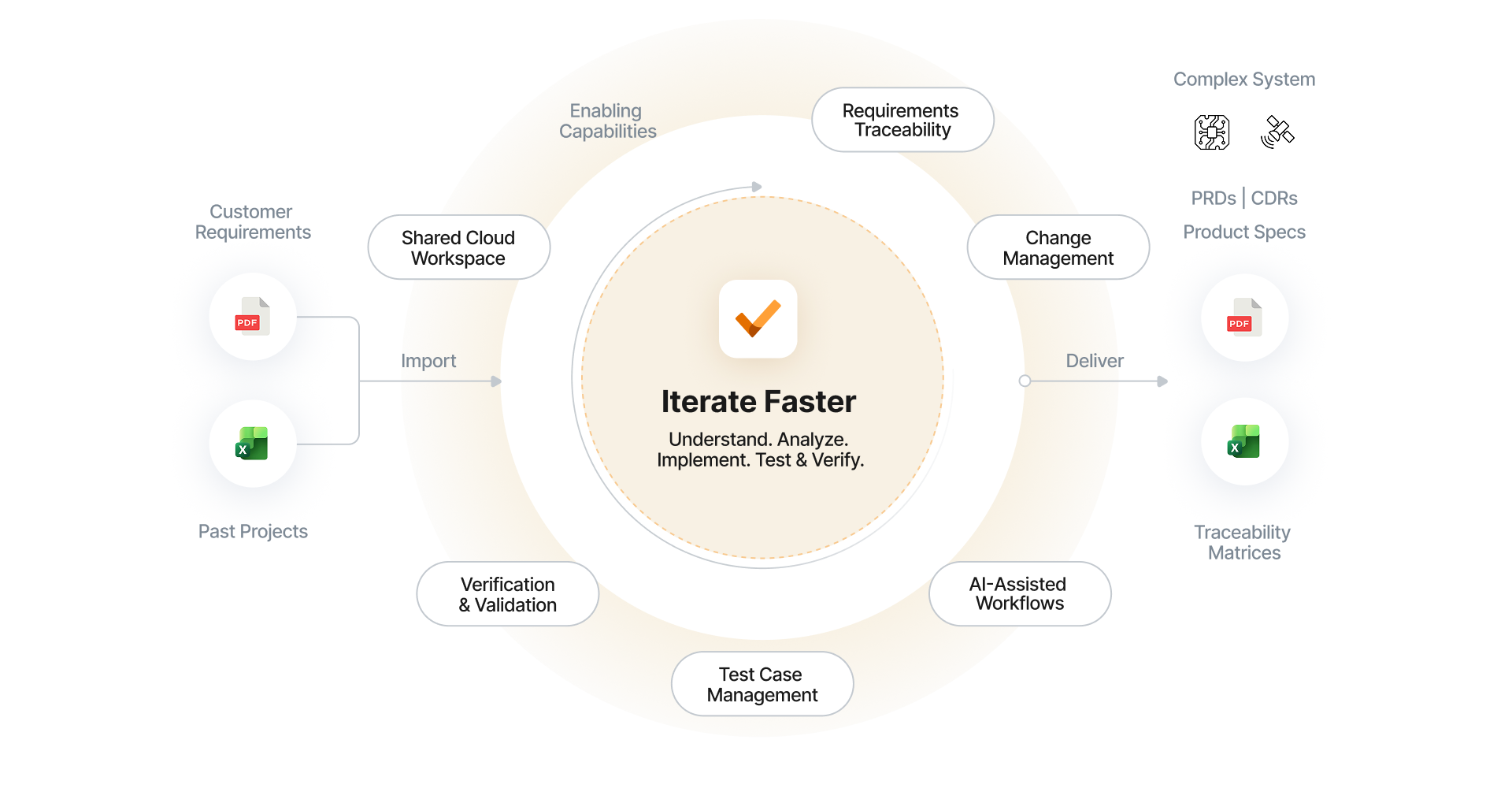
Manage Structured Requirements Without Sacrificing Speed
Requirements will change and your team needs to see what's affected before it is too late.
Altium links requirements to designs, tests, and design reviews in one shared, structured workspace. Import specs, track progress, verify coverage, and generate compliance reports without the busywork.
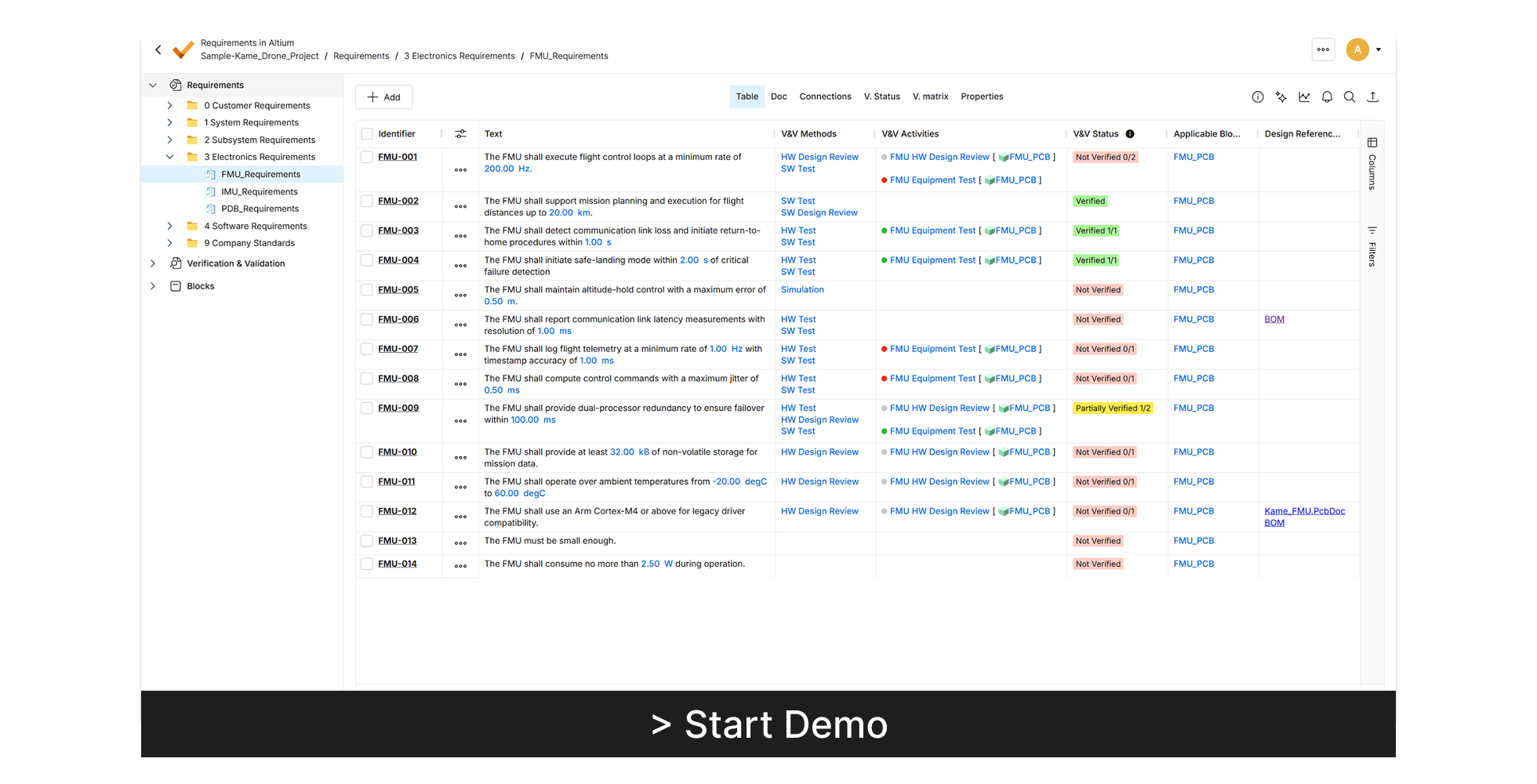
Capture and Share Requirements in Requirements Portal
Replace scattered documents with a shared requirements workspace. Import from any format, structure and organize requirements, and align your team on the same live spec. Track progress, manage change, and generate audit-ready documentation from live project data.
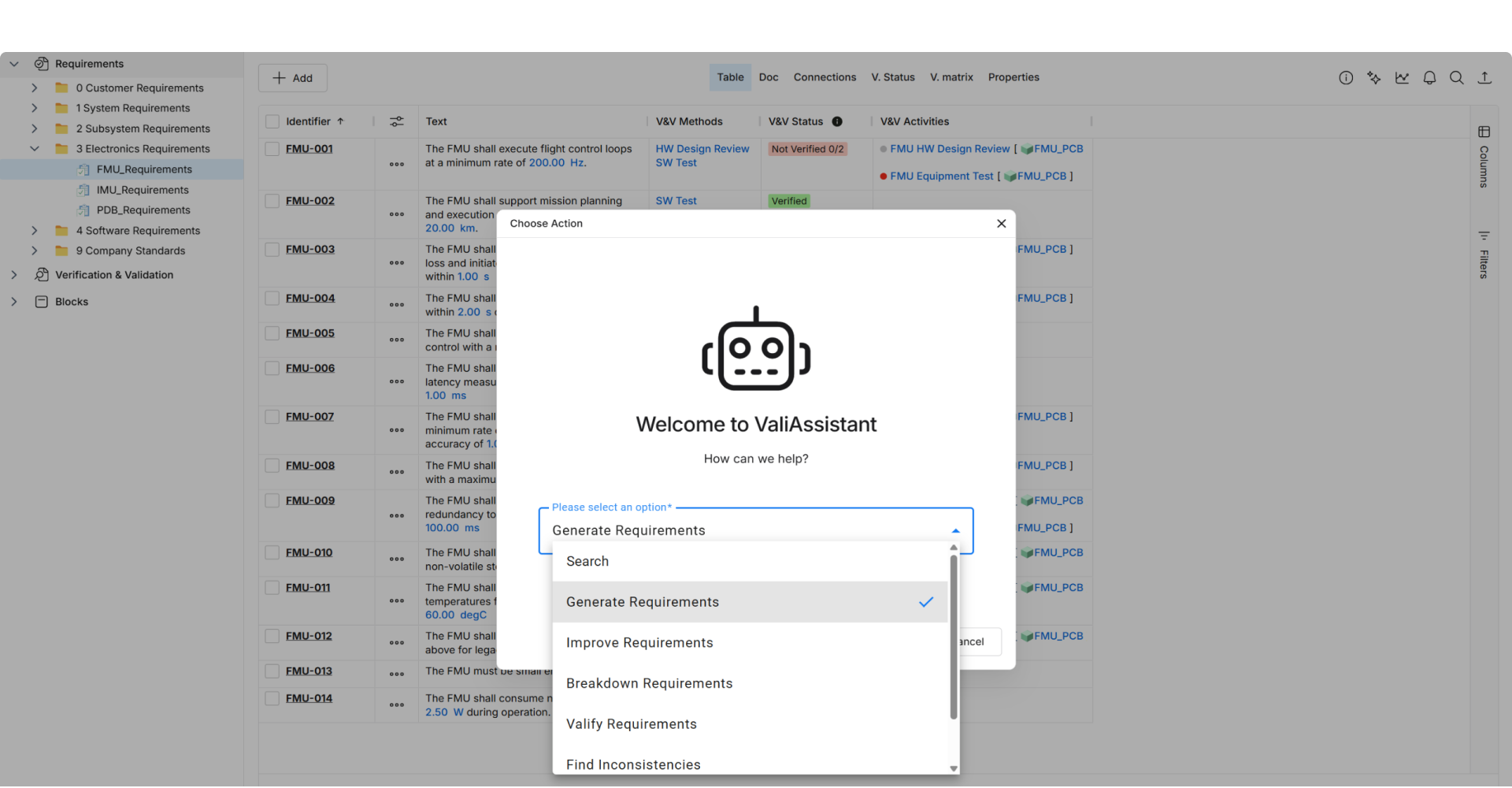
Accelerate Your Workflows With Agentic Requirements Engineering
Use AI to import and structure requirements from any format, get answers grounded in your project data, and delegate repetitive tasks to background agents that act directly on your requirements — not in a separate chat window.
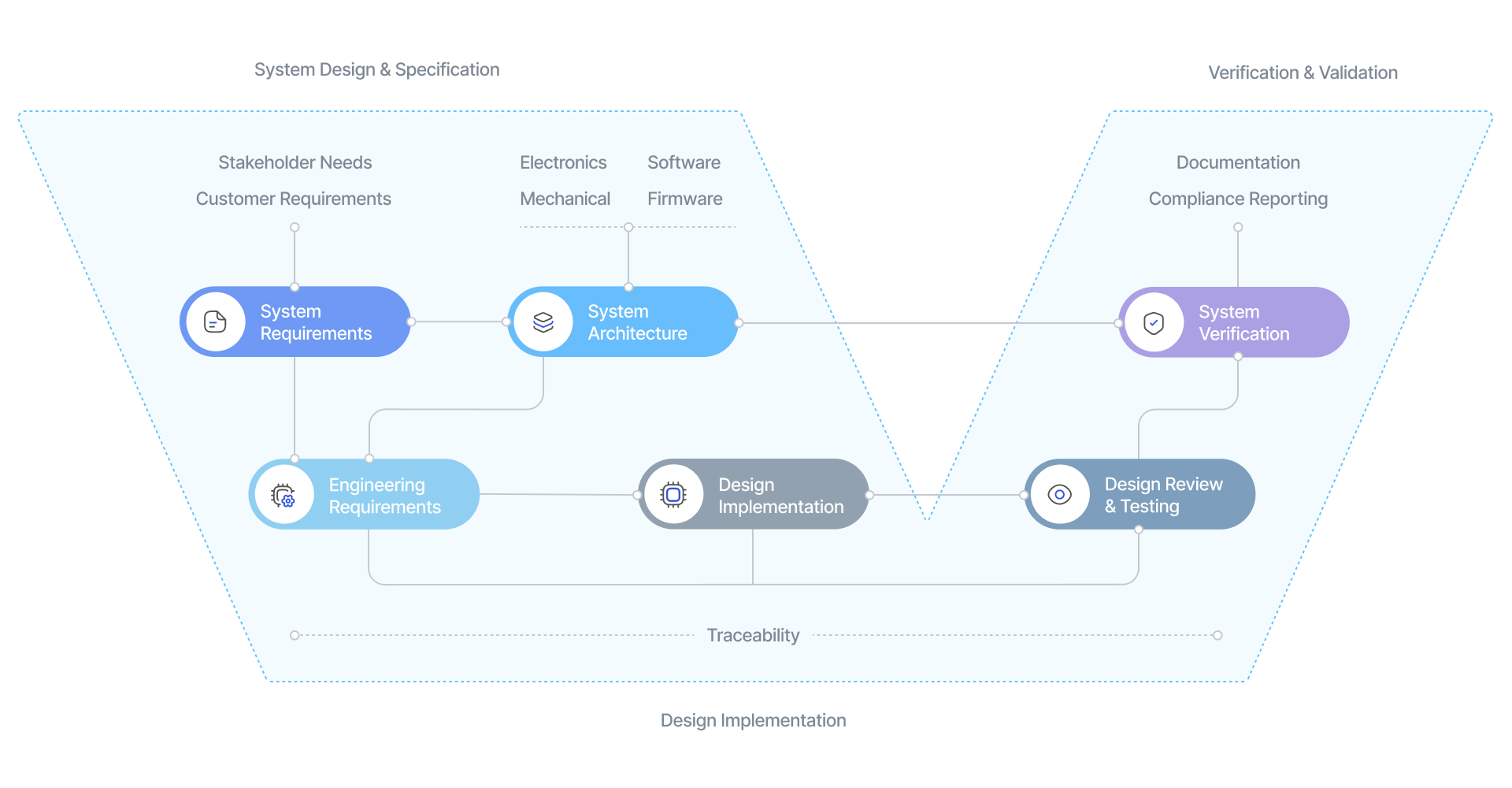
Plan and Track Verification and Testing in Your Cloud Workspace
Plan verification, create test cases, and capture evidence to ensure verification coverage and compliance. Link each requirement to the test results that prove it. Monitor requirements status in real time to detect and report potential issues early.
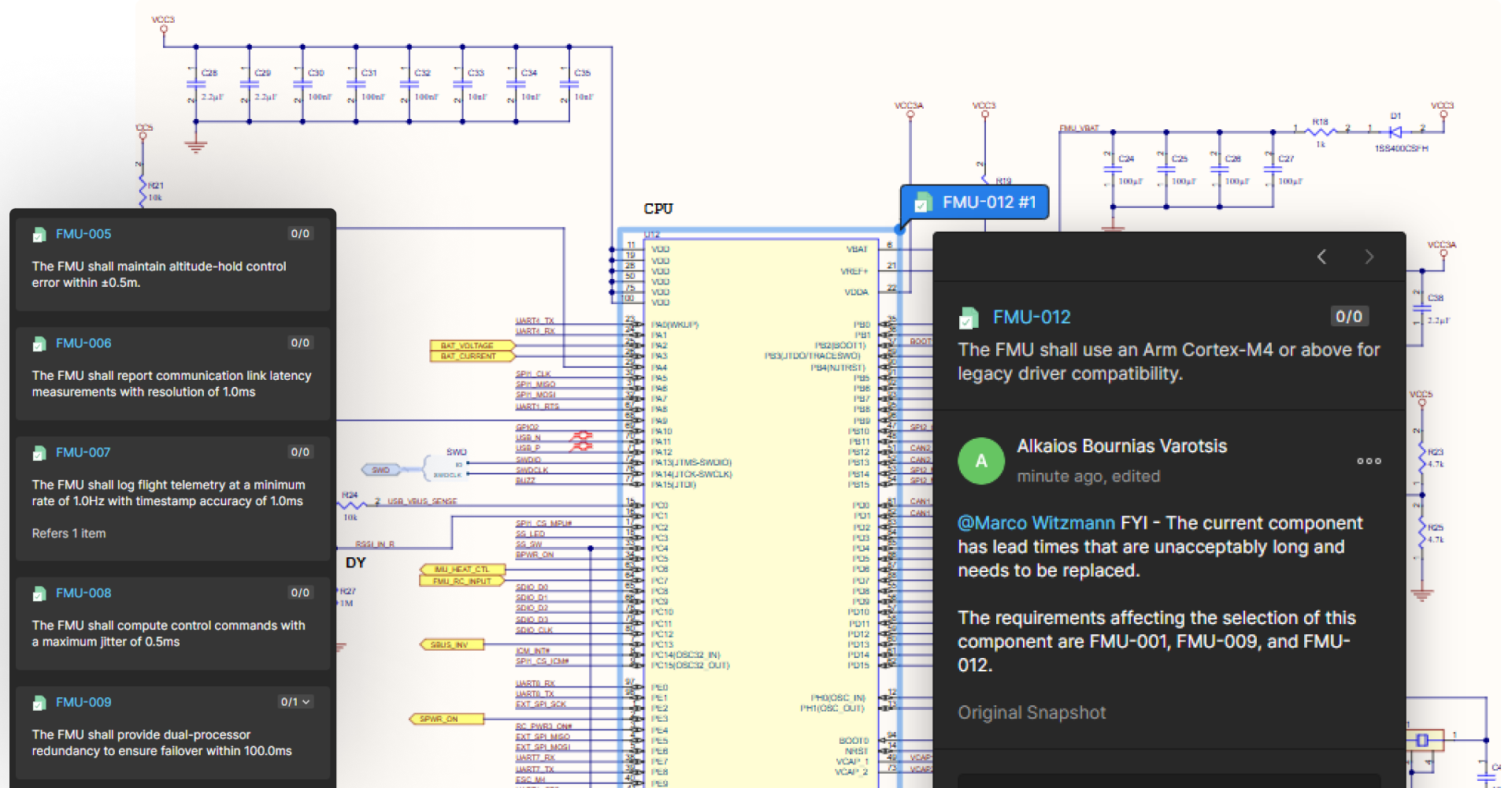
Work With Requirements in Your ECAD Platform
Electronics engineers work with requirements in Altium Designer. Their team leads and colleagues — systems, software, mechanical, and verification engineers — access the same requirements in the web browser. Requirements are linked to schematics, PCB layouts, and BOMs for traceability. Everyone stays in sync.
FAQs
Spreadsheets are flexible and familiar — but they don't scale. As your team or product grows, you run into version drift, unclear ownership, no traceability, and manual audit prep. Managing requirements in documents is like designing from a printed schematic — it looks right, but it's already outdated. Altium replaces scattered spreadsheets with a collaborative, versioned, and traceable workspace that integrates directly with your design and verification workflows — without the cost and complexity of enterprise platforms. Capture and manage requirements and verification in Requirements Portal, work with requirements in Altium Designer and Altium 365.
Download Requirements Management Guide →
No. Altium's requirements capabilities are designed for engineers, not requirements specialists. The tool guides your workflow — you don't need formal training or a mature process in place. If your team can work with a spreadsheet, they can work with this.
Requirements are natively supported in Altium Designer and all electronic design files uploaded to your Altium cloud workspace. Link requirements to schematics, PCB layouts, and BOMs — down to the component level. Status changes automatically sync across your project, so engineers always work from up-to-date specifications.
Yes. The requirements importer lets you drop XLS, PDF, or DOC files and convert them into structured requirements. The importer uses AI to recognize and structure your data — including text, values, parameters, and parent-child relationships — so you don't have to start from scratch. This helps your team transition smoothly from informal documents to a scalable, collaborative requirements tool.
No. Most hardware teams don't follow a formal requirements process — and that's exactly who this is built for. Requirements and design evolve in parallel in real product development. Altium supports that reality: start from what you have, structure as you go, and add traceability and verification as your process matures. Lightweight means easy to adopt — not limited in capability.
Altium’s AI assistant for requirements uses a custom large language model to automate engineering tasks. Altium does not collect or use customer data to train our AI assistant.
With the AI assistant, you can:
- Import requirements
- Generate requirements
- Improve requirements
- Break down requirements
- Parameterize requirements
- Find inconsistencies
- Assess quality
If your team is working toward standards like IEC 60601, ISO 13485, CFR Part 820, ISO 13485, or FDA regulations, you need to demonstrate that every requirement has been verified and that evidence is traceable end to end. Altium lets you plan verification activities, create test cases, and capture evidence directly against your requirements. Teams can link regulatory requirements to design outputs, track changes with version control and generate the documentation needed for FDA, EMA and ISO audits—all in one platform.
Valued by Users,
Trusted by Organizations

Department Director at Sensio
“We've found Altium's Requirements Portal to be a game-changer in our product development process. The structured approach to documenting requirements has streamlined our workflow, making it easier to manage and organize project specifications effectively. Working with requirements is both productive and enjoyable!”

Project Manager (R&D & CI) at Memtronik Innovations
“The ROI is FAST. We design three to five products a month, and reprints can easily increase our costs by 40%. Requirements Portal has saved us a lot of downtime in production. We basically got our value back in a couple of months.”

Systems Engineer at ISISPACE
“Requirements Portal has been an instrumental tool, allowing us to gather all-level requirements in one database and ensure full traceability throughout the project's life. Its ease of use, flexibility and scalability are features we really enjoy.”

Tool Solution Architect at Ultratronik GmbH (UX-Gruppe)
“The introduction of the Requirements Portal helps the UX-Group to always keep track of the fast changing requirements during the development process of our products. The integration into Altium is also a huge improvement for our review process during the hardware development and helps to shorten it noticeably.”

Resources
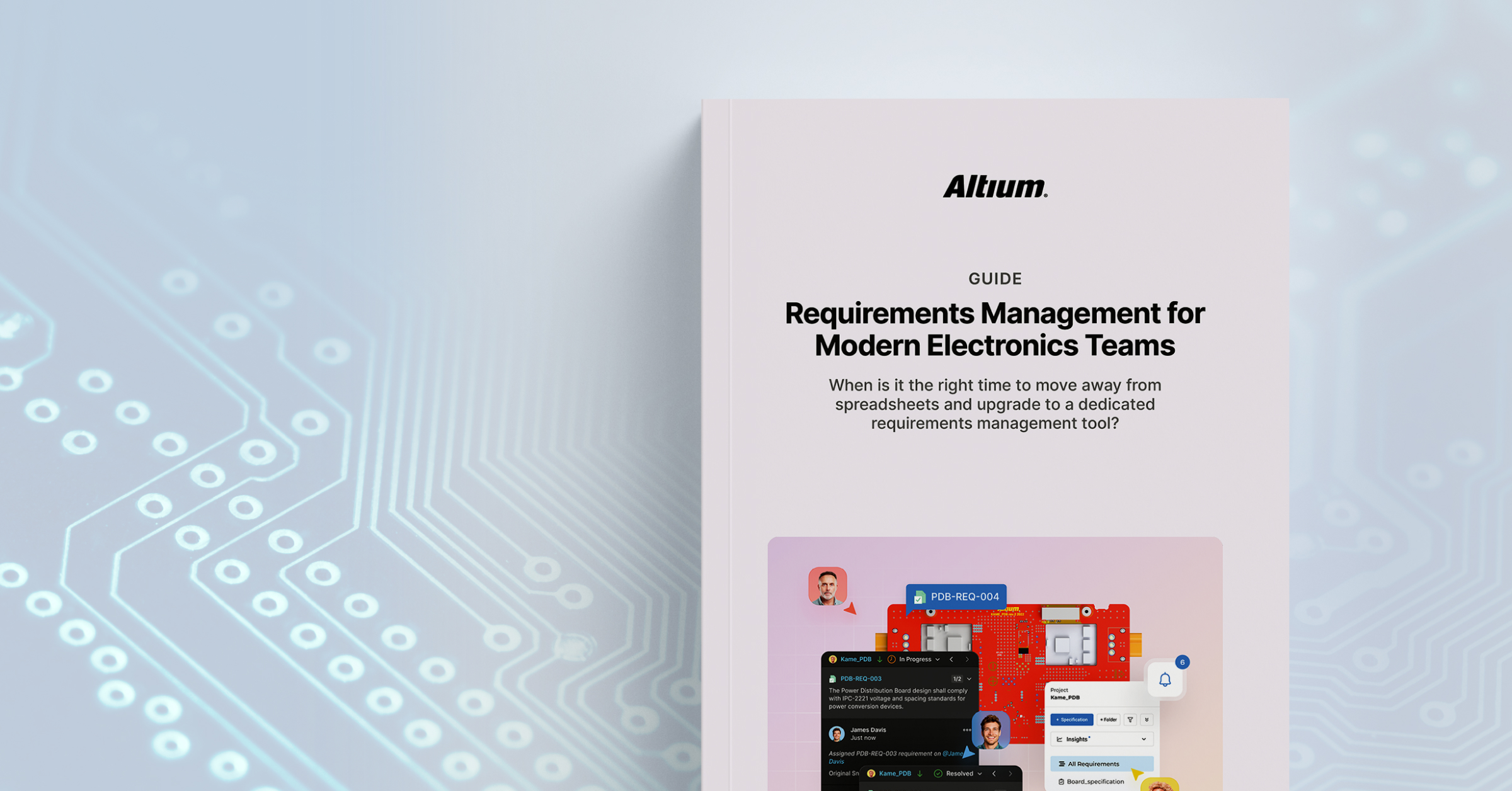
Guide
Requirements Management for Modern Electronic Hardware Teams
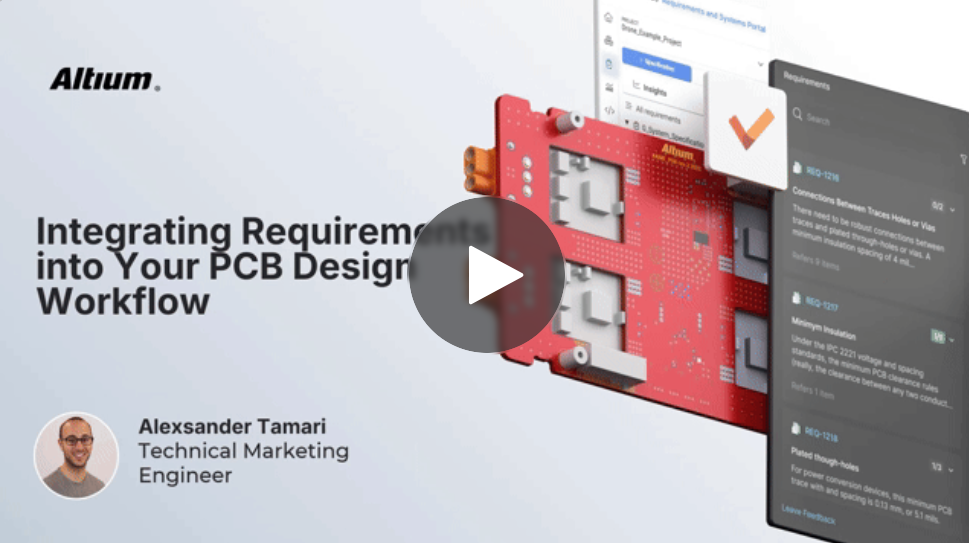
Video
Integrating Requirements into Your PCB Design Workflow

Podcast
Automating Requirements: How Altium 365 Is Changing Engineering

Contact Us
to Learn More About
Altium Agile
Platform-based solution for electronics product
and systems, delivering control without complexity
Complete this form and our sales team will reach out to answer your questions about Altium Agile Teams or Altium Agile Enterprise.