
다각형 및 구리 영역
인쇄 회로 기판에서 흔히 요구되는 것은 대규모의 구리 영역입니다. 이는 아날로그 설계에서 접지 구리의 격자 영역이 될 수도 있고, 무거운 전원 공급 전류를 운반하기 위한 크고, 단단한 구리 영역이거나, EMC 차폐를 위한 단단한 접지 영역일 수 있습니다.
Altium Designer에서는 다양한 설계 객체를 사용하여 구리 영역을 정의할 수 있습니다. 간단한 경우에는 Fills(채움)와 Solid Regions(단단한 영역)을 사용할 수 있습니다. 이들은 사각형 및 다각형 타입의 객체로, 패드, 비아, 트랙 또는 텍스트와 같은 다른 객체 주변을 채우지 않습니다. 이 페이지에서는 Fill과 Solid Region 객체에 대해 설명합니다.
더 복잡한 경우에는 폴리곤 푸어(Polygon Pours)를 사용합니다. 폴리곤 푸어의 장점은 적용 가능한 전기적 클리어런스(Electrical Clearance) 및 폴리곤 연결 스타일 디자인 규칙(Polygon Connect Style Design Rules)에 따라 다른 네트에 속한 구리 객체 주변을 자동으로 푸어하는 것입니다. 폴리곤 푸어에 대해 자세히 알아보려면 신호 레이어의 폴리곤 페이지를 참조하세요.
PCB 전체에 전기적으로 안정된 접지 또는 전원 참조를 제공하기 위해 전원 평면이 사용됩니다. 전원 평면에 대해 자세히 알아보려면 내부 전원 및 분할 평면 페이지를 참조하세요.
필(Fills) 작업하기

선택된 솔리드 영역의 예
채우기(Place » Fill)는 모든 레이어, 구리(신호) 레이어를 포함하여 배치할 수 있는 직사각형 모양의 디자인 객체입니다. 채우기는 직사각형 모양으로 제한되며 패드, 비아, 트랙, 영역, 다른 채우기 또는 텍스트와 같은 다른 객체를 피하지 않습니다. 채우기가 신호 레이어에 배치되면 넷에 연결될 수 있습니다.
[접기]  배치된 채움
채움은 모든 레이어에 배치할 수 있는 직사각형 객체입니다. 신호 레이어에 배치되면 채움은 차폐를 제공하거나 대전류를 운반하는 데 사용할 수 있는 고체 구리 영역이 됩니다. 다양한 크기의 채움을 결합하여 불규칙한 모양의 영역을 커버할 수 있으며 트랙이나 호 세그먼트와 결합하고 네트에 연결될 수도 있습니다.
채움은 비전기 레이어에도 배치할 수 있습니다. 예를 들어, 자동 라우팅을 위한 '진입 금지' 영역을 지정하기 위해 Keep-Out 레이어에 채움을 배치합니다. 전원 평면, 솔더 마스크 또는 페이스트 마스크 레이어에 채움을 배치하여 해당 레이어에 공극을 생성합니다. PCB 라이브러리 편집기에서는 채움을 사용하여 구성 요소의 발자국을 정의할 수 있습니다.
사용 가능성
채움은 다음 방법으로 PCB 및 PCB 라이브러리 편집기에서 배치할 수 있습니다:
- PCB 편집기 - 다음과 같은 접근 방법이 가능합니다:
- 메인 메뉴에서 배치 » 채움을 선택합니다.
- 디자인 공간 상단에 위치한 활성 바의 드롭다운에서 채움 버튼 (
 )을 클릭합니다. (다른 관련 명령에 액세스하려면 활성 바 버튼을 클릭하고 있습니다. 명령이 사용되면 해당 섹션의 활성 바에서 가장 위에 있는 항목이 됩니다.)
 - 디자인 공간에서 마우스 오른쪽 버튼을 클릭한 다음 컨텍스트 메뉴에서 배치 » 채움을 클릭합니다.
- 배선 툴바에서 버튼을 클릭합니다.
- PCB 라이브러리 편집기 - 다음과 같은 접근 방법이 가능합니다:
- 메인 메뉴에서 배치 » 채움을 선택합니다.
- 디자인 공간 상단에 위치한 활성 바의 드롭다운에서 채움 버튼 ()을 클릭합니다. (다른 관련 명령에 액세스하려면 활성 바 버튼을 클릭하고 있습니다. 명령이 사용되면 해당 섹션의 활성 바에서 가장 위에 있는 항목이 됩니다.)
- 디자인 공간에서 마우스 오른쪽 버튼을 클릭한 다음 컨텍스트 메뉴에서 배치 » 채움을 선택합니다.
- PCB Lib 배치 툴바에서 버튼을 클릭합니다.
배치
명령을 실행한 후, 커서가 십자 모양으로 변경되고 채움 배치 모드에 진입합니다. 다음과 같은 순서의 작업을 수행하여 배치합니다:
- 채움의 첫 번째 모서리를 고정하기 위해 클릭하거나 Enter를 누릅니다.
- 채움의 크기를 조정하기 위해 커서를 이동한 다음 대각선 반대편 모서리를 고정하고 채움 배치를 완료하기 위해 클릭하거나 Enter를 누릅니다.
- 추가 채움을 계속 배치하거나 배치 모드를 종료하려면 마우스 오른쪽 버튼을 클릭하거나 Esc를 누릅니다.
배치 중 수행할 수 있는 추가 작업은 다음과 같습니다:
- 배치를 일시 중지하고 Tab 키를 눌러 속성 패널의 채움 모드에 액세스하여 속성을 즉석에서 변경할 수 있습니다. 배치를 재개하려면 일시 정지 버튼 오버레이 (
 )를 클릭합니다.
 - 채움의 첫 번째 모서리를 고정하기 전에 L 키를 눌러 보드의 다른 쪽으로 채움을 뒤집을 수 있습니다.
- 디자인의 모든 보이는 레이어를 순환하며 배치 레이어를 빠르게 변경하기 위해 숫자 키패드의 + 및 - 키를 누릅니다.
- 초기 이동 방향에 따라 수평 또는 수직 축으로 이동 방향을 제한하려면 Alt 키를 누릅니다.
채우기 속성

속성 패널의 채우기 모드.
위치
 아이콘이
아이콘이  (잠금 해제)로 표시되어야 아래 필드에 접근할 수 있습니다. 잠금/잠금 해제 아이콘을 토글하여 잠금 상태를 변경하세요.
- (X/Y)
- X (첫 번째 필드) - 현재 디자인 공간 원점에 대한 채우기 참조점의 X(수평) 좌표입니다. 채우기의 X 위치를 변경하려면 편집하세요. 값은 미터법 또는 영국식 단위로 입력할 수 있으며, 현재 기본 단위가 아닌 단위의 값을 입력할 때는 단위를 포함하세요.
- Y (두 번째 필드) - 현재 원점에 대한 채우기 참조점의 Y(수직) 좌표입니다. 채우기의 Y 위치를 변경하려면 편집하세요. 값은 미터법 또는 영국식 단위로 입력할 수 있으며, 현재 기본 단위가 아닌 단위의 값을 입력할 때는 단위를 포함하세요.
- 회전 - 채우기의 회전 각도(도 단위)로, 0도(3시 방향 수평선)에서 반시계 방향으로 측정됩니다. 채우기의 회전을 변경하려면 편집하세요. 최소 각도 해상도는 0.001°입니다.
속성
- 구성 요소 – 이 필드는 선택된 채우기가 PCB 구성 요소의 일부일 때만 PCB 편집기에서 표시되며, 부모 PCB 구성 요소의 지정자를 표시합니다. 부모 구성 요소의 속성 패널을 열기 위해 클릭 가능한 구성 요소 링크를 선택하세요.
- 넷 - 채우기에 넷을 선택하는 데 사용합니다. 활성 보드 디자인의 모든 넷이 드롭다운 목록에 나열됩니다. 채우기가 어떤 넷에도 연결되지 않았음을 지정하려면 넷 없음을 선택하세요. 원시 구성 요소의 넷 속성은 디자인 규칙 검사기가 PCB 객체의 배치가 합법적인지 결정하는 데 사용됩니다. 또는, 디자인 공간의 객체를 선택하여 해당 객체의 넷을 선택된 채우기에 할당하려면 넷 할당 아이콘(
 )을 클릭할 수 있습니다.
 - 레이어 - 채우기가 배치된 레이어입니다. 채우기는 시스템 레이어를 제외한 모든 레이어에 배치될 수 있습니다. 다른 레이어를 선택하려면 드롭다운을 사용하세요.
- 면적 - 채우기 객체의 면적 값을 지정합니다.
- 길이 - 길이를 표시합니다.
- 너비 - 너비를 표시합니다.
패이스트 마스크 확장
- 규칙 - 채우기에 대한 패이스트 마스크 확장이 적용 가능한 패이스트 마스크 확장 디자인 규칙에 정의된 값에 따르도록 선택합니다. 이 옵션을 선택하면 관련 확장 값이 비활성화됩니다.
- 수동 - 적용 가능한 디자인 규칙을 무시하고 아래 필드에 채우기의 패이스트 마스크 확장 값을 지정하려면 선택합니다.
솔더 마스크 확장
- 규칙 - 채우기에 대한 솔더 마스크 확장이 적용 가능한 솔더 마스크 확장 디자인 규칙에 정의된 값에 따르도록 체크박스를 선택합니다. 이 옵션을 선택하면 관련 확장 값이 비활성화됩니다.
- 수동 - 적용 가능한 디자인 규칙을 무시하고 아래 필드에 채우기의 솔더 마스크 확장 값을 지정하려면 체크박스를 선택합니다.
솔리드 영역 작업하기
영역(Place » Solid Region)은 다각형 모양을 정의하는 데 사용되는 디자인 객체입니다. 솔리드 영역(일반적으로 영역이라고 함)은 신호(구리) 레이어를 포함한 모든 레이어에 배치될 수 있습니다. 채우기와 마찬가지로, 영역은 패드, 비아, 트랙, 채우기, 다른 영역 또는 텍스트와 같은 다른 객체를 피하지 않습니다. 영역이 신호 레이어에 배치되면 넷에 연결될 수 있습니다.
영역 객체는 다음과 같은 목적으로 사용될 수 있도록 특별한 속성을 가지고 있습니다:
- 다각형 컷아웃 - 주변 다각형이 둘러싸는 음의(빈) 객체로 본질적으로 작동합니다.
- 보드 형상 컷아웃 - 불규칙한 컷아웃이나 보드의 구멍을 정의하기 위해 음의(빈) 객체로도 작동합니다. 보드 컷아웃 영역은 제조 목적으로 Gerber 및 ODB++ 파일로 전송됩니다.
- 사용자 정의 패드 형상 - 비정상적인 패드의 구리 영역을 정의하여 자동으로 일치하는 형상의 솔더 및 페이스트 마스크 축소/확장을 정의할 수 있습니다.
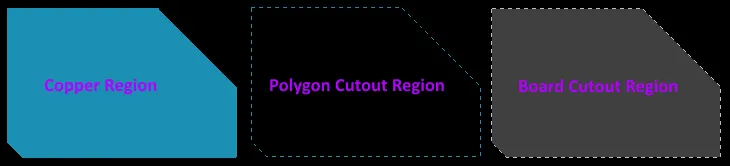
다양한 유형의 배치된 영역 객체 예시
요약
영역, 또는 솔리드 영역으로도 알려진 것은, 어떤 레이어에도 배치될 수 있는 다각형 모양의 기본 객체입니다.
영역은 어떤 수의 변과 꼭지점을 가질 수 있습니다. 신호 레이어에 배치되어 차폐를 제공하거나 대전류를 운반하는 데 사용될 고체 구리 영역을 정의하는 데 사용될 수 있습니다. 양의 영역은 트랙이나 호 세그먼트와 결합되어 네트에 연결될 수 있습니다. PCB 라이브러리 편집기에서는 구리 레이어에 사용자 정의 패드 모양을 생성하거나 솔더 및 페이스트 마스크에 특수 마스크 모양을 생성하는 데 영역을 사용할 수 있습니다. 비전기 레이어에서는 로고와 같은 작업을 위한 사용자 정의 모양을 정의하는 데 영역을 사용할 수 있습니다.
부정으로 배치된 경우, 영역은 폴리곤 푸어에서 컷아웃(공간)을 생성할 수 있습니다. 이 모드에서는 폴리곤이 푸어될 때 영역이 구리로 채워지지 않습니다. 멀티 레이어에 배치되어 보드 컷아웃으로 사용될 때 부정 영역은 완성된 보드를 통한 구멍이 되는 영역을 정의합니다. 보드 컷아웃 영역은 제조 목적으로 전용 라우트 레이어를 사용하여 Gerber 및 ODB++ 파일로 전송됩니다.
사용 가능성
영역은 다음 방법 중 하나로 PCB 편집기 및 PCB 라이브러리 편집기에서 배치할 수 있습니다:
- PCB 편집기:
- 메인 메뉴에서 배치 » 솔리드 영역, 배치 » 폴리곤 푸어 컷아웃 또는 디자인 » 보드 모양 » 보드 컷아웃 정의를 선택합니다.
- 디자인 공간 상단에 위치한 액티브 바의 드롭다운에서 솔리드 영역 버튼(
 )을 클릭합니다. (다른 관련 명령에 액세스하려면 액티브 바 버튼을 클릭하고 있습니다. 명령이 사용되면 해당 섹션의 액티브 바 상단 항목이 됩니다.)
 - 디자인 공간에서 마우스 오른쪽 버튼을 클릭한 다음 컨텍스트 메뉴에서 배치 » 솔리드 영역 또는 폴리곤 푸어 컷아웃을 클릭합니다.
- PCB 라이브러리 편집기:
- 메인 메뉴에서 배치 » 솔리드 영역 또는 폴리곤 푸어 컷아웃을 선택합니다.
- 디자인 공간 상단에 위치한 액티브 바의 드롭다운에서 솔리드 영역 버튼()을 클릭합니다. (다른 관련 명령에 액세스하려면 액티브 바 버튼을 클릭하고 있습니다. 명령이 사용되면 해당 섹션의 액티브 바 상단 항목이 됩니다.)
배치
명령을 시작한 후, 커서가 십자선으로 변경되고 영역 배치 모드에 들어갑니다. 다음과 같은 일련의 작업을 수행하여 배치를 합니다:
- 커서를 위치시킨 다음 영역의 시작 꼭지점을 고정하기 위해 클릭합니다.
- 두 번째 꼭지점을 배치할 준비가 되면 커서를 이동합니다. 기본 동작은 각 클릭으로 두 개의 변을 배치하고, 그 사이에 사용자 정의 모서리 모양을 배치하는 것입니다. 자세한 내용은 다각형 모양의 PCB 디자인 객체 편집 페이지를 참조하십시오.
- 마우스를 계속 움직이며 클릭하여 추가 꼭지점을 배치합니다.
- 마지막 꼭지점을 배치한 후, 오른쪽 버튼을 클릭하거나 Esc를 눌러 영역 배치를 닫고 완료합니다. 소프트웨어가 자동으로 시작점과 마지막으로 배치된 점을 연결하여 모양을 완성하므로 수동으로 영역을 닫을 필요가 없습니다.
- 추가

영역 모드의 속성 패널.속성
- 구성 요소 – 이 필드는 선택된 영역이 PCB 구성 요소의 일부일 때만 PCB 편집기에서 표시되며, 상위 PCB 구성 요소의 지정자를 표시합니다. 상위 구성 요소의 구성 요소 모드 속성 패널을 열려면 클릭 가능한 구성 요소 링크를 선택하세요.
- 넷 - 영역에 대한 넷을 선택하는 데 사용합니다. 활성 보드 디자인의 모든 넷이 드롭다운 목록에 나열됩니다. 영역이 어떤 넷에도 연결되지 않았음을 지정하려면 넷 없음을 선택하세요. 원시의 넷 속성은 디자인 규칙 검사기가 PCB 객체가 합법적으로 배치되었는지를 결정하는 데 사용됩니다. 또는, 디자인 공간의 객체를 선택하여 해당 객체의 넷을 선택된 영역에 할당하려면 넷 할당 아이콘()을 클릭할 수 있습니다.
- 레이어 - 이 필드는 종류가 구리, 다각형 컷아웃, 또는 캐비티로 설정될 때만 사용할 수 있습니다. 영역이 배치되는 레이어를 지정하는 데 사용합니다. 구리와 다각형 컷아웃의 경우, 활성 보드 디자인의 모든 정의된(및 활성화된) 레이어가 드롭다운 목록에 나열됩니다. 캐비티의 경우, 활성화된 기계 레이어만 나열됩니다.
- 종류 - 드롭다운을 사용하여 영역의 기능을 선택하세요:
- 구리 - 신호(구리) 레이어와 같은 모든 디자인 레이어에 배치할 수 있는 고체, 양성 영역입니다.
- 다각형 컷아웃 - 다각형 내의 부정적 또는 비구리 영역을 정의하는 다각형 컷아웃으로 기능합니다. 컷아웃을 배치한 후 다각형을 다시 채워야 합니다.
- 보드 컷아웃 - 보드 모양 내의 부정적 영역 또는 구멍을 정의하는 보드 컷아웃으로 기능합니다.
-
캐비티 - 보드 내부에 임베디드 캐비티를 정의하는 데 사용되며, 구성 요소가 '보드 내부'에 위치하게 됩니다. 이 종류의 영역은 적합한 기계 레이어에만 배치될 수 있으며, 각면에 충분한 여유 공간을 두고 구성 요소의 3D 본체를 완전히 둘러싸야 합니다. 필요한 여유 공간이 얼마나 되는지는 제조업체에 문의하세요.
- 호 근사치 - 완벽한 호에서의 최대 편차를 입력하세요.
- 영역 - 영역 객체의 면적을 표시합니다.
- (X/Y)
- X (첫 번째 필드) - 이 필드는 현재 원점에 대한 패드 중심의 현재 X 위치를 보여줍니다. 필드의 값을 편집하여 현재 원점에 대한 패드의 위치를 변경할 수 있습니다. 값은 미터법 또는 영국식 단위로 입력할 수 있으며, 현재 기본 단위가 아닌 단위로 값을 입력할 때는 단위를 포함하세요. 기본 단위(미터법 또는 영국식)는 디자인 공간에서 객체가 선택되지 않았을 때 접근 가능한 보드 모드의 속성 패널의 기타 영역에서 단위 설정에 의해 결정되며, 단위가 지정되지 않은 경우 사용됩니다.
- Y (두 번째 필드) - 이 필드는 현재 원점에 대한 패드 중심의 현재 Y 위치를 보여줍니다. 필드의 값을 편집하여 현재 원점에 대한 패드의 위치를 변경할 수 있습니다. 값은 미터법 또는 영국식 단위로 입력할 수 있으며, 현재 기본 단위가 아닌 단위로 값을 입력할 때는 단위를 포함하세요. 기본 단위(미터법 또는 영국식)는 디자인 공간에서 객체가 선택되지 않았을 때 접근 가능한 보드 모드의 속성 패널의 기타 영역에서 단위 설정에 의해 결정되며, 단위가 지정되지 않은 경우 사용됩니다.

 AI로 번역됨